Water Extraction and Removal in Fullerton, CA
Standing water on a Fullerton floor keeps wicking into drywall, baseboards and subfloor. The extraction crew pulls it out with truck-mounted units, then the drying team takes over.
(888) 563-9619Call now for Fullerton emergency water removal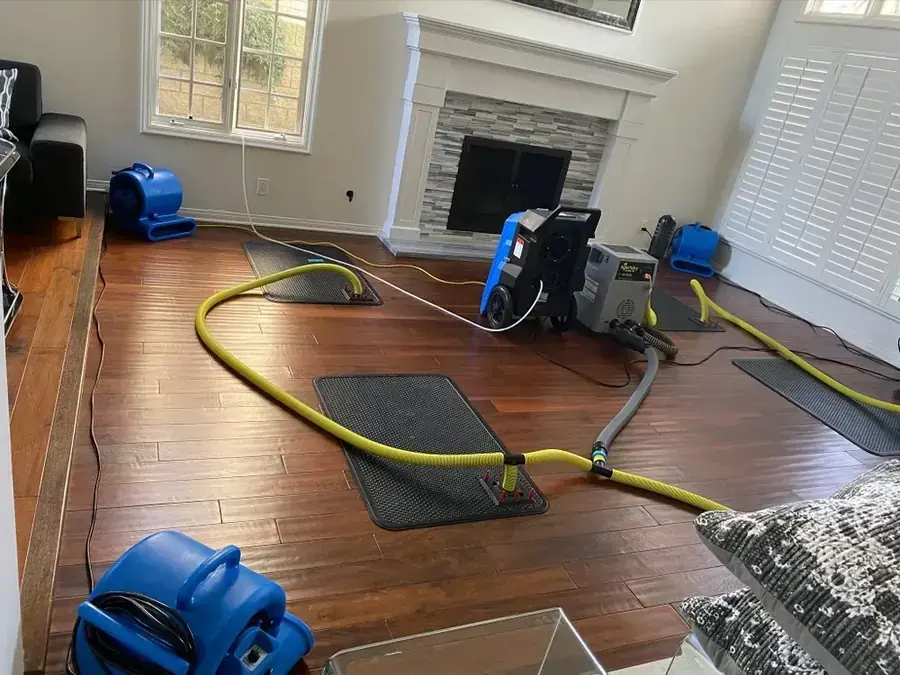
What to do the moment you find standing water
- 01Stop the source
Close the main shut-off or the valve feeding the leak.
- 02Kill wet circuits
Switch off breakers for wet rooms if the panel is dry and safe to reach.
- 03Photograph first
Take wide and close photos of the water before anything moves.
- 04Lift what you can
Move rugs, boxes and furniture off the wet floor, then call.
How standing water is handled in Fullerton
The order of the work is what separates a finished dry-out from a cosmetic one.
Rapid local response
The Fullerton restoration crew works day and night and moves fast on active water, because the first hours decide how much has to come out.
IICRC S500 drying standard
The drying team maps moisture first, then dries the structure to the S500 goal, not just the surface you can see.
Claim-ready documentation
Photos before any demolition, a moisture map and daily readings go into the file an adjuster reviews.
North Orange County water experts
Galvanized lines, crawlspaces, slab leaks and unit-to-unit apartment leaks are the everyday work in Fullerton.
What does water extraction and removal cost in Fullerton, CA?
In Fullerton, CA, water extraction and removal typically runs $400 to $3,500, depending on how much water is standing, the water category, and whether carpet, pad or a crawlspace is involved.
Want a number for your own loss? The restoration team scopes it on site.
Price the Fullerton job by phoneSingle room
- Clean-water loss
- Surface and pad extraction
- Moisture map
Several rooms
- Carpet and pad work
- Baseboard and wall checks
- Equipment setup
Deep or dirty water
- Crawlspace or garage pumping
- Category 2 or 3 water
- Material removal
What moves the number: the water category, the square footage that is wet, the material class of the flooring, and how fast drying started after the water appeared.
For a planning range, try the Fullerton water damage cost calculator.
How standing water is dried, step by step
- 01
Map the moisture
The tech who does the walkthrough uses thermal imaging and pinless meters to find where the water went, including behind walls and under floors.
- 02
Extract the water
The extraction crew pulls standing water with truck-mounted units so it leaves the building instead of moving to the next room.
- 03
Set the drying
The drying team places air movers for the room's evaporation load and LGR dehumidifiers to pull that moisture out of the air.
- 04
Read, log, verify
Readings are logged daily, and the equipment comes out when wet materials sit within 2 to 4 points of a dry reference.
Extraction is the first move on every water loss in Fullerton, whether the water came from a burst line in a Sunny Hills kitchen or a storm that pushed runoff under a back door near Richman Park. Every gallon pulled out as liquid is a gallon the dehumidifiers never have to evaporate, which is why a strong extraction pass shortens the whole dry-out.
Why extraction comes before fans
Air movers blowing over standing water mostly spread humidity through the house. The extraction crew removes the bulk water first, then goes back over carpet and pad with weighted tools that squeeze water out of the fibers. On hard floors, squeegees and wands pull water away from baseboards before it climbs the drywall.
- Truck-mounted units move water out of the building instead of to the next room
- Portable extractors reach upstairs units and tight condo hallways
- Submersible pumps handle deep water in garages and crawlspaces
- Weighted extraction tools pull water from carpet pad in place
Water still spreading across the floor? Shut the main and call before it reaches the subfloor.
Call about Fullerton water extractionWhat happens right after the water is out
The tech who does the walkthrough maps moisture with thermal imaging and pinless meters, because the wet area is almost always larger than the visible puddle. That map decides what stays, what gets removed and where the equipment goes. Wet carpet pad usually comes up, while carpet itself can often be dried in place on a clean-water loss. Drywall that wicked water gets a flood cut only where readings say it is wet.
From there the drying team sets air movers and LGR dehumidifiers for the room's evaporation load and takes readings every day. For the full drying process see structural drying, and for water that came from outside see storm and flood water cleanup.
Extraction in Fullerton homes and buildings
Older bungalows near downtown and Hillcrest Park often sit on raised foundations, so water that crosses the floor can drain into the crawlspace below and needs its own extraction. Post-war slab homes across south and east Fullerton hold water in the flooring layers instead. Apartments near Cal State Fullerton add another layer: water from one unit travels through the ceiling into the next. The Ready.gov flood safety page covers what to do before re-entering a flooded room, and the EPA WaterSense leak checklist explains how to spot the slow leaks that turn into extraction jobs.
Category decides the method
Clean supply-line water can often be extracted and dried in place. Gray water from appliances needs cleaning of what it touched, and sewage or outside flood water is Category 3, where porous materials get removed, not dried.
Water Extraction and Removal across Fullerton
The Fullerton restoration crew covers every Fullerton ZIP code and the neighboring north Orange County cities, day or night.
The restoration team works across Fullerton, from Downtown and SOCO to Sunny Hills, Raymond Hills, Amerige Heights and the Cal State Fullerton area.
Coverage also reaches Anaheim, Placentia, Brea, Buena Park, La Habra, Yorba Linda and La Mirada.
See every neighborhood and ZIP codeRelated water damage services in Fullerton
Water Extraction and Removal questions in Fullerton, answered
How fast should standing water be extracted?
As soon as possible. Water wicks into drywall and subfloor within hours, and mold can start inside 24 to 48 hours on wet organic materials. Extraction first, then drying, limits how much has to be torn out.
Can a shop vacuum do the job?
A shop vacuum helps on a small spill, but it cannot pull water out of carpet pad or reach water under flooring. Truck-mounted and weighted extraction tools remove far more water, which shortens drying.
Will my carpet have to be thrown out?
Not always. On a clean-water loss the carpet can often be extracted and dried in place, while the pad is usually replaced. Carpet touched by sewage or outside flood water is removed.
What happens after the water is extracted?
The tech maps moisture with meters and thermal imaging, removes wet materials that cannot be dried, and sets air movers and dehumidifiers. Readings are taken daily until the structure meets the drying goal.
Is water extraction covered by insurance?
Sudden and accidental water, like a burst line, is often covered after the deductible, while outside flood water usually falls under flood coverage. Coverage depends on your policy, so it is worth checking with your own insurer.
Do I need to leave the house during extraction?
Usually not for a clean-water loss in one area. Sewage or heavily contaminated water can call for containment, and some families stay elsewhere until that part of the job is done.
Water Extraction and Removal in Fullerton? Call now.
Every hour water sits, it moves further into drywall, flooring and framing. The Fullerton restoration crew extracts it, dries the structure to the IICRC S500 standard and documents the loss for the claim.