Crawlspace Water Damage in Fullerton, CA
Raised-foundation bungalows near downtown Fullerton hide water under the floor, where it soaks joists and subfloor out of sight. The extraction crew pumps it out and the drying team dries the framing.
(888) 563-9619Speak with 24/7 dispatch in Fullerton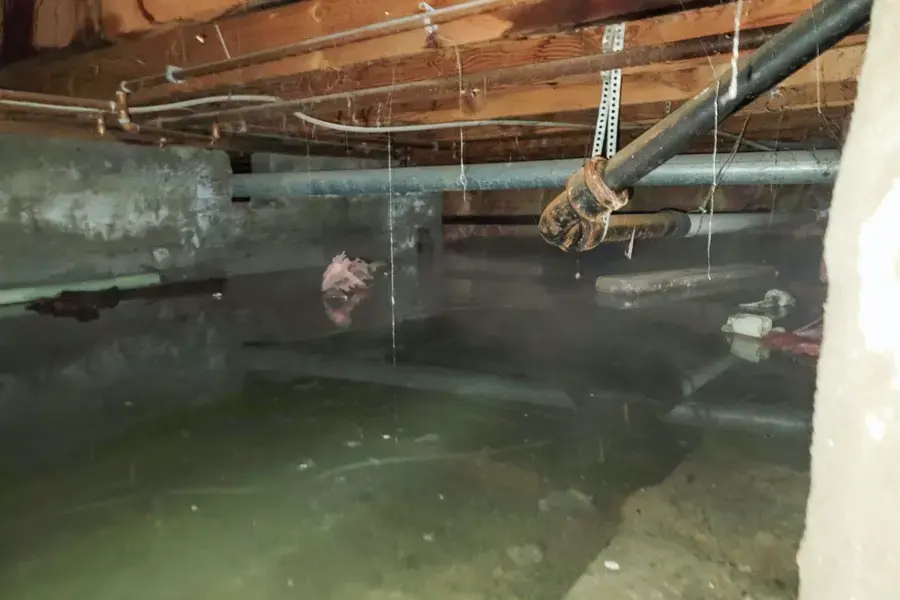
What to do the moment you find crawlspace water
- 01Stop the water
Close the main if a supply or drain line is leaking under the floor.
- 02Stay out of the crawlspace
Standing water near wiring and ducts is a shock risk.
- 03Note the smell and soft spots
Mark where floors feel soft or boards are cupping.
- 04Call for pumping and drying
The sooner the framing dries, the less wood has to be replaced.
How crawlspace water is handled in Fullerton
The order of the work is what separates a finished dry-out from a cosmetic one.
Rapid local response
The Fullerton restoration crew works day and night and moves fast on active water, because the first hours decide how much has to come out.
IICRC S500 drying standard
The drying team maps moisture first, then dries the structure to the S500 goal, not just the surface you can see.
Claim-ready documentation
Photos before any demolition, a moisture map and daily readings go into the file an adjuster reviews.
North Orange County water experts
Galvanized lines, crawlspaces, slab leaks and unit-to-unit apartment leaks are the everyday work in Fullerton.
What does crawlspace water damage cost in Fullerton, CA?
In Fullerton, CA, crawlspace water damage restoration typically runs $1,500 to $8,500 or more, depending on how deep the water is, whether insulation and vapor barrier must be replaced, and whether the water is clean, gray or sewage.
Want a number for your own loss? The restoration team scopes it on site.
Price the Fullerton job by phoneShallow clean water
- Pumping and extraction
- Vapor barrier removal
- Joist drying
Wet insulation and subfloor
- Insulation removal
- Subfloor drying
- Daily readings
Sewage or storm water
- Category 3 protocol
- Soil treatment
- Antimicrobial and containment
What moves the number: the water category, how much of the crawlspace is wet, whether insulation and vapor barrier come out, and how fast drying started.
For a planning range, try the Fullerton water damage cost calculator.
How crawlspace water is dried, step by step
- 01
Map the moisture
The tech who does the walkthrough uses thermal imaging and pinless meters to find where the water went, including behind walls and under floors.
- 02
Extract the water
The extraction crew pulls standing water with truck-mounted units so it leaves the building instead of moving to the next room.
- 03
Set the drying
The drying team places air movers for the room's evaporation load and LGR dehumidifiers to pull that moisture out of the air.
- 04
Read, log, verify
Readings are logged daily, and the equipment comes out when wet materials sit within 2 to 4 points of a dry reference.
Many of Fullerton's early homes, from the Craftsman bungalows near Hillcrest Park to the Spanish Colonial houses on Golden Hill, sit on raised foundations with a crawlspace underneath. That space carries the supply lines, the drain lines and often the ducts. When something leaks, or storm water runs in through a vent, the water sits in the dark where nobody sees it for days.
How water gets into a Fullerton crawlspace
- A leaking galvanized or copper supply line under the floor
- A cracked cast iron drain or a failed toilet flange above
- Winter storm runoff flowing through foundation vents on a downhill lot
- A water heater or washer leak that drains through the floor
- A sewer lateral backup that surfaces under the house
Warm, damp crawlspace air moves up into the living space, which is why a musty smell, cupping hardwood or soft spots in the floor are often the first clues.
Musty smell and a soft floor? Talk to someone about the water under the house now.
Call about a Fullerton crawlspaceHow crawlspace water damage is handled
The extraction crew pumps standing water with submersible pumps and wet vacuums. Wet fiberglass insulation between the joists and a soaked vapor barrier usually come out, because they hold water against the wood. The tech who does the walkthrough then reads the joists, sill plates and subfloor with pin meters to map what is wet.
Drying a crawlspace means closing it up and treating it like a room: the drying team seals vents temporarily, runs LGR dehumidifiers and air movers under the floor and logs readings each day. If the water came from a sewer line or outside flooding it is Category 3, so the soil surface gets cleaned and treated with an EPA-registered antimicrobial; see sewage backup cleanup.
Keeping the next leak out
Once the framing is dry, a new vapor barrier and replaced insulation protect the floor. Grading and gutters that move roof water away from the foundation keep storm runoff out of the vents. The EPA moisture control course covers how moisture moves through buildings, and the Ready.gov flood page covers storm safety.
Wood under the house has a drying goal too
Joists and subfloor are dry when their readings match dry framing elsewhere in the house, not when the dirt looks dry. The drying team logs both every day.
Crawlspace Water Damage across Fullerton
The Fullerton restoration crew covers every Fullerton ZIP code and the neighboring north Orange County cities, day or night.
The restoration team works across Fullerton, from Downtown and SOCO to Sunny Hills, Raymond Hills, Amerige Heights and the Cal State Fullerton area.
Coverage also reaches Anaheim, Placentia, Brea, Buena Park, La Habra, Yorba Linda and La Mirada.
See every neighborhood and ZIP codeRelated water damage services in Fullerton
Crawlspace Water Damage questions in Fullerton, answered
How do I know if my crawlspace has water?
A musty smell, cupping hardwood, soft spots in the floor or damp air near floor vents are common signs. A flashlight look through the access hatch usually confirms it.
Is crawlspace water dangerous?
It can be. Standing water near wiring is a shock risk, and sewage or storm water carries bacteria. Leave the inspection and cleanup to a crew with the right gear.
Does wet insulation have to be removed?
Usually. Fiberglass batts hold water against the joists and lose their value once soaked, so they are removed and replaced after the framing is dry.
How long does a crawlspace take to dry?
Four to eight days is common, depending on how wet the wood got and the weather. Equipment stays until joist and subfloor readings match dry framing.
Will the hardwood floor above recover?
Often, if drying starts early. Boards that cupped from below can flatten as the subfloor dries, though some may need sanding or replacement.
Is crawlspace water damage covered by insurance?
A sudden pipe leak is often covered, while seepage and outside flooding are usually treated differently. Coverage depends on your policy, so it is worth checking with your own insurer.
Crawlspace Water Damage in Fullerton? Call now.
Every hour water sits, it moves further into drywall, flooring and framing. The Fullerton restoration crew extracts it, dries the structure to the IICRC S500 standard and documents the loss for the claim.