Slab Leak Water Damage in Fullerton, CA
A warm spot on the tile, a hissing wall or a jump in the water bill: slab leaks soak Fullerton flooring from below. The drying team maps the wet footprint and dries the slab out.
(888) 563-9619Speak with 24/7 dispatch in Fullerton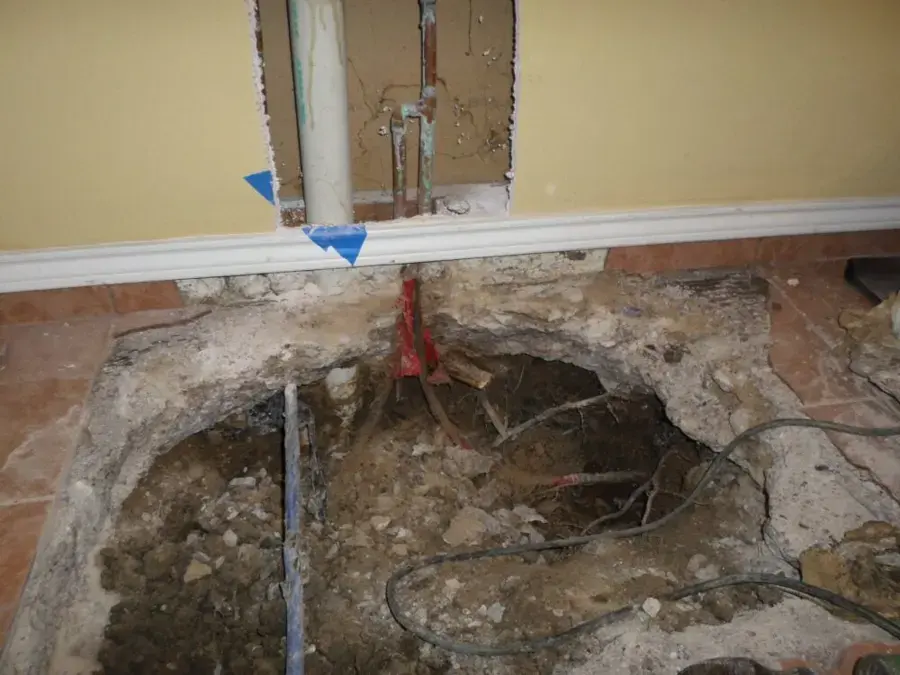
What to do the moment you find a slab leak
- 01Shut the main
Close the main valve to stop the line under the slab.
- 02Turn off the water heater
If the leak is on a hot line, switch the heater off.
- 03Photograph the floor
Record the warm spot, the stain and any lifted planks.
- 04Call a plumber and the restoration team
The plumber repairs the pipe; the restoration team dries the house.
How a slab leak is handled in Fullerton
The order of the work is what separates a finished dry-out from a cosmetic one.
Rapid local response
The Fullerton restoration crew works day and night and moves fast on active water, because the first hours decide how much has to come out.
IICRC S500 drying standard
The drying team maps moisture first, then dries the structure to the S500 goal, not just the surface you can see.
Claim-ready documentation
Photos before any demolition, a moisture map and daily readings go into the file an adjuster reviews.
North Orange County water experts
Galvanized lines, crawlspaces, slab leaks and unit-to-unit apartment leaks are the everyday work in Fullerton.
What does slab leak water damage cost in Fullerton, CA?
In Fullerton, CA, slab leak water damage restoration typically runs $1,500 to $9,000 or more, not counting the plumbing repair, depending on how much flooring is wet, whether it has to come up, and how long the leak ran.
Want a number for your own loss? The restoration team scopes it on site.
Price the Fullerton job by phoneCaught early
- One room of flooring
- Pad and tack strip pulled
- Slab drying
Spread under floors
- Several rooms or a hallway
- Planks or tile removed
- Dehumidifiers and daily logs
Long-running leak
- Wide wet footprint
- Walls and cabinets wet
- Extended slab drying
What moves the number: the size of the wet footprint, the flooring type over the slab, how many days the leak ran, and how fast drying started.
For a planning range, try the Fullerton water damage cost calculator.
How a slab leak is dried, step by step
- 01
Map the moisture
The tech who does the walkthrough uses thermal imaging and pinless meters to find where the water went, including behind walls and under floors.
- 02
Extract the water
The extraction crew pulls standing water with truck-mounted units so it leaves the building instead of moving to the next room.
- 03
Set the drying
The drying team places air movers for the room's evaporation load and LGR dehumidifiers to pull that moisture out of the air.
- 04
Read, log, verify
Readings are logged daily, and the equipment comes out when wet materials sit within 2 to 4 points of a dry reference.
Much of south and east Fullerton was built in the 1950s and 1960s as slab-on-grade tract homes, with copper supply lines running under or through the concrete. North Orange County water is hard and mineral heavy, and decades of it, plus pipe rubbing against concrete, can wear a pinhole through the copper. The water then rises into the flooring above.
Signs a slab leak is behind the water
- A warm or damp patch on tile or carpet, often near a hot water line
- Laminate or wood planks cupping or lifting in one area
- The sound of running water with every fixture off
- A water bill that climbs with no change in use
- Baseboards swelling along one wall with no leak above it
A plumber confirms the leak with pressure testing and acoustic tools, then repairs it by rerouting the line or opening the slab. The EPA Fix a Leak guidance explains how to read the water meter to check for a hidden leak.
Hear water running with everything off? Shut the main and call before the flooring lifts.
Call about a Fullerton slab leakHow slab leak damage is dried
The tech who does the walkthrough maps the wet footprint with thermal imaging and pinless meters, because the visible stain is usually much smaller than the wet area under the floor. Carpet pad and tack strip over the leak get pulled, and floating floors often come up so the slab can release its moisture. Tile set on thinset may survive, but the grout lines and nearby walls still need drying.
Concrete gives up water slowly. The drying team aims air movers at the slab surface and runs LGR dehumidifiers, sometimes with desiccants for dense Class 4 materials. For the general process see structural drying, and for a leak that shows up in a wall instead see burst pipe cleanup.
Why new flooring waits for dry concrete
Flooring laid on a wet slab can cup, lift or grow mold underneath within weeks. Crews compare readings on the wet slab against a dry reference area of the same house and hold off on new flooring until they match. The California Department of Water Resources has water-saving tips worth a look too, since a hidden slab leak can waste thousands of gallons.
The slab is dry when the readings say so
Concrete can feel dry on top while it still holds moisture deeper down. Most crews take readings daily and only clear the floor for new flooring once the numbers match the dry reference.
Slab Leak Water Damage across Fullerton
The Fullerton restoration crew covers every Fullerton ZIP code and the neighboring north Orange County cities, day or night.
The restoration team works across Fullerton, from Downtown and SOCO to Sunny Hills, Raymond Hills, Amerige Heights and the Cal State Fullerton area.
Coverage also reaches Anaheim, Placentia, Brea, Buena Park, La Habra, Yorba Linda and La Mirada.
See every neighborhood and ZIP codeRelated water damage services in Fullerton
Slab Leak Water Damage questions in Fullerton, answered
How do I know if I have a slab leak?
Common signs are a warm spot on the floor, running water sounds with fixtures off, lifted planks, or a jump in the water bill. A plumber confirms it with pressure testing and acoustic or thermal tools.
Who fixes the pipe and who dries the house?
A plumber repairs or reroutes the line. A restoration company handles the extraction, material removal and drying of everything the water reached.
Does the slab itself need to be dried?
Yes. Concrete holds water and releases it slowly. New flooring on a wet slab can cup, lift or grow mold, so crews dry it to a verified reading first.
Can tile over a slab leak be saved?
Sometimes. Tile set on thinset often survives, but grout lines and wet walls still need drying. Carpet pad and laminate over the leak are usually removed.
Is slab leak damage covered by insurance?
Many policies treat the resulting water damage differently from the cost of finding and fixing the pipe. Coverage depends on your policy, so it is worth checking with your own insurer.
How long does slab leak drying take?
Four to seven days is common for a contained area, longer for a slab that sat wet for weeks. The drying team pulls equipment when readings match a dry reference.
Slab Leak Water Damage in Fullerton? Call now.
Every hour water sits, it moves further into drywall, flooring and framing. The Fullerton restoration crew extracts it, dries the structure to the IICRC S500 standard and documents the loss for the claim.